Loading market prices

Production Calculator

AI Staking Panel

AI Monitored
BTC

Minimum single stake is $100 equivalent.

Current Price $65,000.00
Last Updated --
USD Value
$130,000.00
Matched Tier
Elite
Cycle
6h
Estimated AI Return
15.0% - 18.0%
Estimated Return Amount
$19,500.00 - $23,400.00
AI Risk Level
AI Monitored

AI Staking Workflow

From Asset Deposit to AI Reward

A simple four-step process makes the staking route clear before users prepare a deposit.

User Guide

How to Use Tiger Staking from Wallet Setup to Reward Settlement

This guide explains the full user journey: preparing a wallet or exchange account, selecting USDT, ETH, or BTC, creating an order, sending assets to the matched address, tracking status, and reviewing USDT reward settlement.

Tiger Staking uses a receive-only deposit workflow. The website does not ask users to connect a wallet, approve smart-contract permissions, enter private keys, or upload seed phrases. Estimated AI return ranges are not guaranteed and can vary with market conditions.

The video is stored locally in assets/tiger-staking-guide.mp4, so this section can be deployed with the rest of the static website.

Wallet setup and asset preparation flow
Step 01

Create or prepare a wallet

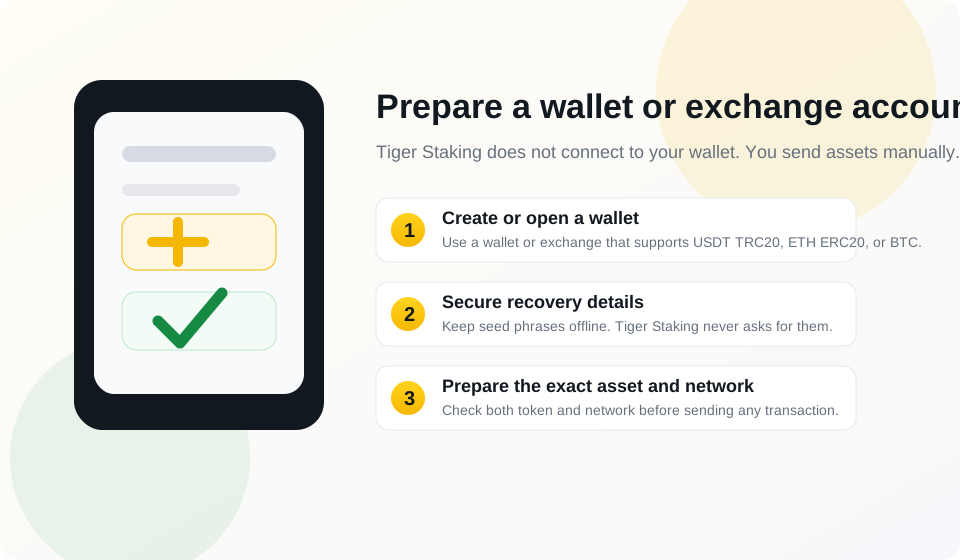
Users can send assets from a self-custody wallet or from a crypto exchange account. The most important point is to use a source that supports the exact asset and network displayed by the order page.

  1. Choose a supported asset source. Prepare USDT on TRC20, ETH on ERC20, or BTC on the BTC network.
  2. If using a self-custody wallet, create it from the official app or website. Write the recovery phrase offline and never send it to support, chat groups, or any website.
  3. If using an exchange, complete the exchange's account and withdrawal setup. Confirm that withdrawals are enabled for the asset and network you plan to use.
  4. Prepare enough asset balance and network fee. A transfer can fail or remain pending if the account does not have enough funds for the withdrawal fee.
  5. Start small if it is the user's first transfer. A small test transfer helps confirm that the asset, network, and receiving address are correct.
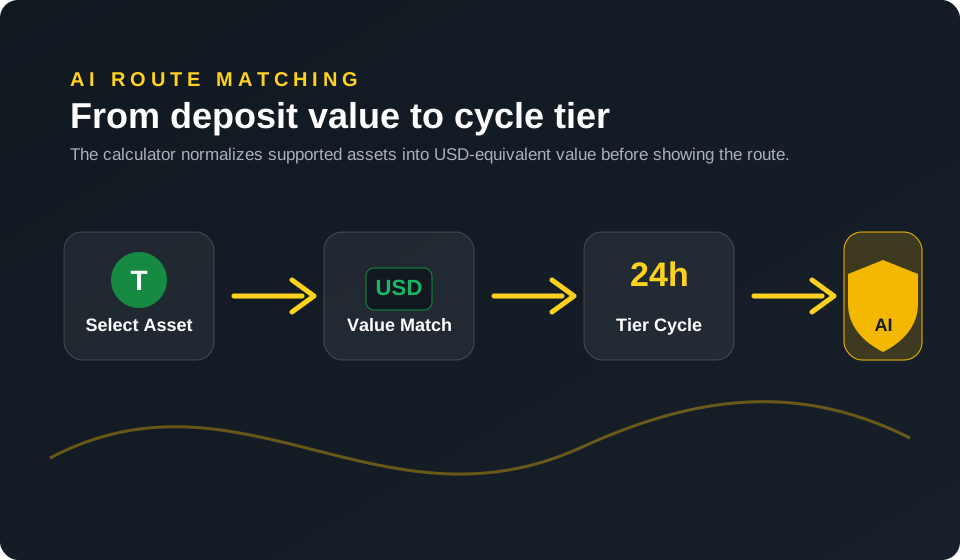
Tiger Staking AI route matching flow
Step 02

Create a Tiger Staking order

Tiger Staking compares deposits by USD-equivalent value instead of token quantity. This makes it easier to compare USDT, ETH, and BTC in one tier system.

  1. Select the asset. Choose USDT, ETH, or BTC in the staking panel.
  2. Enter the amount. The calculator converts the amount into an estimated USD value using available market pricing.
  3. Review the matched tier. Check the tier name, cycle window, estimated AI return range, and risk-control label before continuing.
  4. Create the order. After the order is created, the order page shows the asset, network, amount, USD value, cycle, and matched deposit address.
  5. Do not reuse old instructions. Always follow the current order page, because an address may be reserved only for a specific payment window.
Deposit address and route confirmation
Step 03

Send the exact asset on the exact network

A deposit should match the order page exactly. Sending the wrong token, wrong network, or a different amount can delay processing and may require manual review.

  1. Copy the deposit address from the order page. Use the copy button if available, then compare the first and last characters before sending.
  2. Choose the same network in the wallet or exchange. For example, USDT TRC20 should not be sent through ERC20 or another network.
  3. Send only the selected asset. If the order is for BTC, send BTC only. If the order is for ETH, send ETH only.
  4. Save the transaction hash. The transaction hash is useful when checking blockchain confirmation or asking support about a delayed payment.
  5. Wait for confirmation. Network speed depends on blockchain congestion, exchange withdrawal processing, and confirmation rules.
Order status and USDT reward settlement lifecycle
Step 04

Track order status until the reward stage

The order page helps users understand where the deposit is in the process. Rewards are settled in USDT for simpler reporting across supported deposit assets.

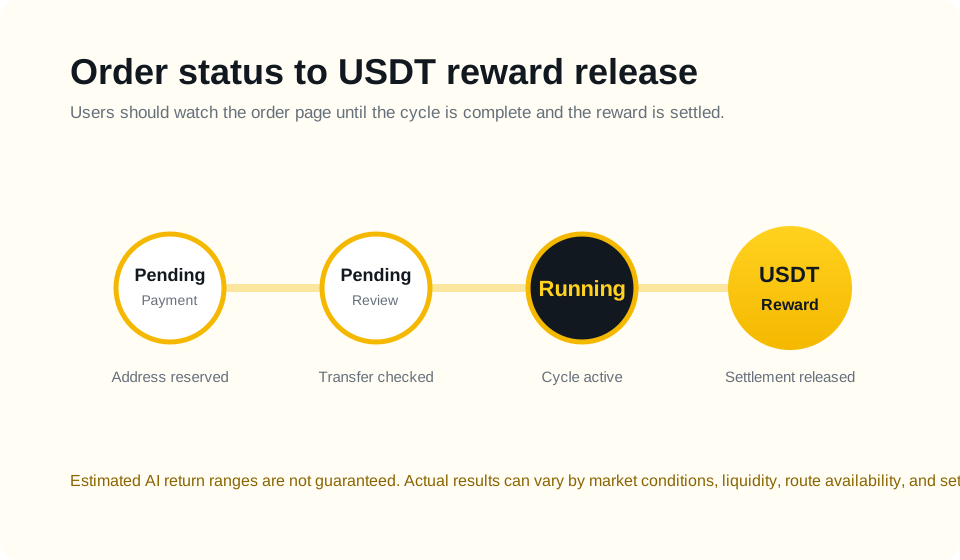
  1. Pending payment: the address is waiting for the user deposit.
  2. Pending review: the transfer has been detected or is waiting for confirmation and internal review.
  3. Running: the AI staking route is active for the matched cycle window.
  4. Reward stage: the system calculates the eligible release based on the matched tier and settles the reward in USDT.
  5. Abnormal, expired, or cancelled: the order is no longer in a normal active flow. Users should review the order details and contact support if needed.
Traditional staking versus Tiger Staking comparison
Why Tiger Staking

How Tiger Staking differs from traditional staking

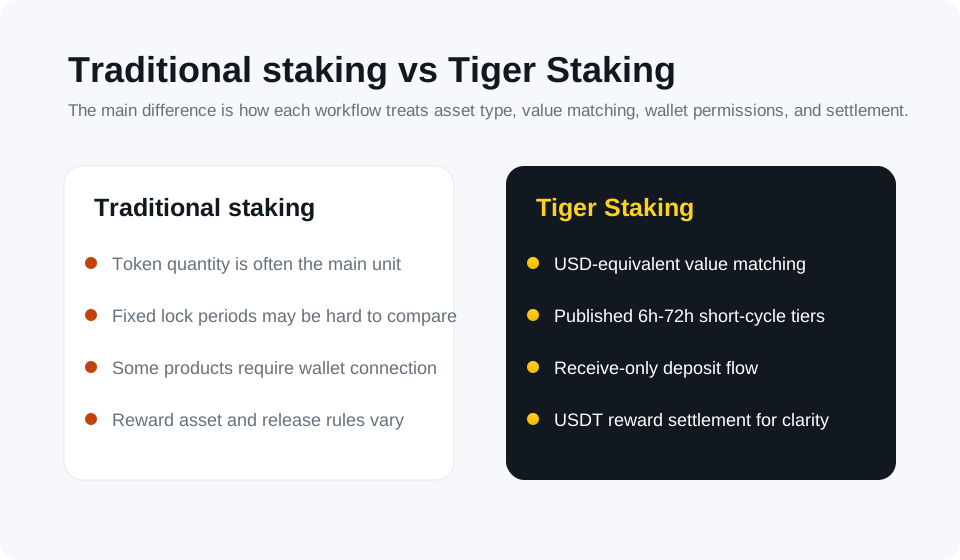
Traditional staking is often built around a single token, validator delegation, fixed lockups, or wallet approvals. Tiger Staking is positioned as a clearer operating layer: supported assets are matched by USD-equivalent value, cycles are published before users create an order, and the deposit workflow is receive-only.

Topic
Traditional staking
Tiger Staking
Value standard
Often compares deposits by token quantity or one token's rules.
Converts supported assets into USD-equivalent value before tier matching.
Asset flexibility
Usually tied to one chain, one token, or validator-specific rules.
Supports USDT, ETH, and BTC under one published tier table.
Wallet permissions
Some products require wallet connection, approvals, or smart-contract interaction.
Uses receive-only deposit addresses and does not request wallet permissions.
Cycle visibility
Lock periods and reward rules may be harder to compare across assets.
Shows tier, cycle, estimated return range, network, and asset before deposit.
Reward settlement
Rewards may be paid in different assets or depend on validator mechanics.
Uses USDT reward settlement for clearer reporting across supported deposits.
Risk clarity
Users may need to understand slashing, validator risk, lockups, and chain-specific mechanics.
Displays AI risk checks, order status, matched tier, and settlement window in one flow.
Before Sending

Final safety checklist

The checklist below should be completed before every deposit. It is designed to reduce wrong-network transfers, wrong-asset transfers, and misunderstandings about estimated returns.

  • Asset checked: the asset in the wallet or exchange matches the order page.
  • Network checked: the withdrawal network is exactly the same as the order network.
  • Address checked: the copied address matches the order page after pasting.
  • Amount checked: the amount and estimated USD value match the intended tier.
  • Fee checked: the wallet or exchange has enough balance for withdrawal fees.
  • Order window checked: the deposit is sent before the order expires.
  • Risk notice understood: estimated AI return ranges are not guaranteed profits.
  • Private data protected: never share seed phrases, private keys, passwords, or 2FA codes.

About Us

AI Staking Tiers

All supported assets use the same USD-equivalent tier rules. Equal value in USDT, ETH, or BTC receives the same cycle and estimated AI return range.

USD Tier Single Stake Value Supported Assets Cycle Estimated AI Return Risk Control Action

Markets

Prices feed the calculator so deposits are matched by USD-equivalent value, not by token quantity.

AI Modules

Frequently Asked Questions